Beyond the PDF: Why We Added Peppol-Compliant UBL Invoicing (and Why It Matters in 2026)
A PDF in an email is digital, but it isn't a true e-invoice. Here's the difference, why governments from Europe to Asia-Pacific are moving to structured UBL invoices, and how Money Magician now creates and imports Peppol BIS 3.0 compliant UBL XML.
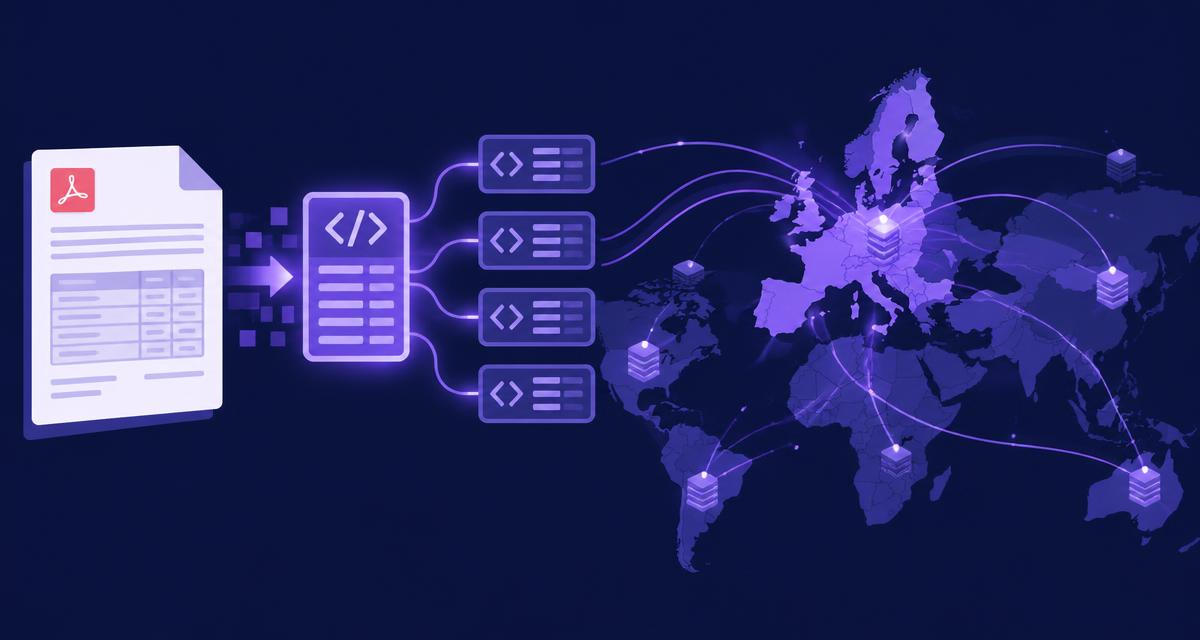
For decades, the invoice has followed the same journey: someone creates a document, saves it as a PDF, attaches it to an email, and the recipient (or their bookkeeper) types the numbers into their own system. It feels digital. In reality, it's paper with extra steps.
That is changing fast. Governments across Europe and far beyond are moving towards structured e-invoices, and the format at the centre of that shift is UBL delivered over the Peppol framework. Money Magician now supports both directions: you can create Peppol-compliant UBL invoices for your clients, and you can upload UBL invoices you receive from suppliers.
But first, let's clear up a confusing term.
Digital invoice vs. e-invoice: what's the difference?
If you email a PDF, isn't that "e-invoicing"? In everyday conversation, many people would say yes. In tax law and in the software world, the answer is no. There are really three levels:
1. Paper invoice
Printed and posted. Rare today, but still around.2. Digital invoice (PDF, scan or image)
An invoice in electronic form, usually a PDF sent by email. It's faster than paper, but it is still made for human eyes. The recipient has to read it, or use OCR and AI to guess which number is the total, which is the VAT and which is the invoice date. Every guess is a chance for a mistake.3. Structured e-invoice (such as UBL XML)
The invoice data itself, in a fixed, standardized, machine-readable format. The seller, buyer, VAT numbers, line items, tax rates, totals and currency each sit in a clearly labelled field. Accounting software can import it directly: no retyping, no guessing.So when the EU, Belgium, Germany or Singapore talk about "e-invoicing", they mean level 3. A PDF in an email is a digital invoice; a UBL file is an e-invoice. Often you'll send both: the PDF for people, the XML for systems.
What are UBL and Peppol?
UBL (Universal Business Language) is an open, international standard for business documents, maintained by OASIS and published as ISO/IEC 19845. It is not owned by any software vendor and it is not limited to one country.
EN 16931 is the European standard that defines what a compliant electronic invoice must contain: the core fields every EU tax authority can rely on.
Peppol is an international framework and network for exchanging these documents. Its invoice specification, Peppol BIS Billing 3.0, builds on UBL and EN 16931 and adds extra rules, for example how sellers and buyers are identified (electronic address schemes such as VAT or chamber of commerce numbers).
Think of it like this: UBL is the language, EN 16931 is the grammar the EU agreed on, and Peppol is the postal system with its own addressing rules.
Why it matters in 2026: a global shift
Structured e-invoicing is no longer a niche requirement for government suppliers. It's becoming the default for business-to-business invoicing in many places:
- European Union: under the VAT in the Digital Age (ViDA) package, structured e-invoicing becomes the standard for cross-border B2B transactions within the EU from 2030, with member states free to introduce domestic mandates earlier.
- Belgium: B2B e-invoicing via Peppol became mandatory from January 2026.
- Germany: businesses must be able to receive structured e-invoices since 2025, with sending obligations phasing in from 2027.
- France and Poland: national e-invoicing systems are rolling out in phases during 2026 and beyond.
- The Netherlands: e-invoicing is already required for suppliers to the government, and broader B2B plans are following the EU timeline.
- Beyond Europe: Australia, New Zealand, Singapore, Japan and Malaysia all use Peppol-based e-invoicing, each with its own national specification.
The exact dates and rules differ per country, so always check what applies to you. The direction, though, is the same everywhere: invoices are turning into data.
Why this is good news for small businesses
E-invoicing mandates are often framed as one more compliance burden. For freelancers, creators and small international businesses, there's a real upside:
- Faster payment. Invoices land directly in your client's accounting system instead of waiting in someone's inbox to be processed.
- Fewer errors. No one retypes your amounts, VAT number or IBAN.
- Cross-border by design. One standard works across many countries, so selling to a client in Brussels, Berlin or Singapore doesn't require a different invoice format for each.
- Professional credibility. Larger clients and public bodies increasingly expect a structured invoice. Being able to provide one puts you on equal footing with much bigger suppliers.
What we built: outbound UBL for your sales invoices
Every sales invoice you create in Money Magician can now be downloaded as a UBL 2.1 XML file that follows Peppol BIS Billing 3.0 and EN 16931.
- Built from your saved invoice data. The XML uses exactly the same customer, line, VAT and total figures as your invoice. Nothing is recalculated or invented.
- Validated against the official rules. We tested our output with official Peppol validation tooling until it passed the XML schema, EN 16931 and Peppol rule checks.
- Clear about missing information. If something required is missing, such as a customer country or a valid electronic address, we tell you exactly what to add instead of guessing.
- Available on your invoice link. When you share an invoice, your client can download both the PDF and the UBL XML from the same secure invoice page, ready to import into their own accounting software.
- Multi-currency. The invoice currency is stated explicitly in the file, so a USD or GBP invoice stays a USD or GBP invoice.
One honest note: Money Magician creates compliant UBL files, but it does not yet deliver them through a Peppol access point. You can download the XML, offer it via your invoice link, or pass it on to your client or a Peppol provider.
What we built: inbound UBL for supplier invoices
E-invoicing works both ways. When a supplier sends you a UBL file, you can now upload it straight into Expenses.
- No OCR, no guessing. Supplier name, invoice number, dates, currency, VAT and totals are read directly from the structured file. Because the data is exact, there's nothing for AI to interpret.
- Safety checks. We check required fields and compare line totals with the invoice totals, and warn you if something doesn't add up. If a file can't be read reliably, we refuse it rather than import doubtful numbers.
- Original kept intact. The original XML is stored with the expense and can be downloaded at any time. If the supplier embedded a PDF, you can view it right next to the data.
- Familiar workflow. Imported invoices show a UBL badge and flow into your categories, VAT figures and reports like any other expense.
The bigger picture
At Money Magician we believe your financial data should be open and portable: easy for you, and easy for whoever you work with, whether that's a client's finance team, your accountant or a tax authority. Structured e-invoicing is a natural extension of that idea. The PDF isn't going away, but it is no longer the whole invoice. The data is.
Ready to try it? Open any sales invoice and choose Download UBL (XML), or upload a supplier's XML file in Expenses. Both changes are listed in the changelog, where you can follow every new feature and improvement as we ship it.
Frequently Asked Questions
Isn't a PDF sent by email already an e-invoice?
In everyday language people call it that, but legally and technically it is a digital invoice, not a structured e-invoice. A PDF is a picture of an invoice that a person (or OCR) has to read. A structured e-invoice, such as UBL XML, contains the same data in a fixed, machine-readable format that accounting software can import directly without retyping or guessing.
Is UBL only for Europe?
No. UBL (Universal Business Language) is an international OASIS and ISO standard. Peppol, the network built on it, is used across Europe and also in countries such as Australia, New Zealand, Singapore, Japan and Malaysia, each with its own local rules on top.
Does Money Magician send invoices over the Peppol network?
Not yet. Money Magician creates UBL XML files that pass Peppol BIS Billing 3.0 and EN 16931 validation, so you can download them, share them via your invoice link, or hand them to your customer or an access provider. Direct delivery through a Peppol access point is not part of this release.
Can I upload UBL invoices from my suppliers?
Yes. Upload a supplier's UBL XML file in Expenses and the amounts, VAT, dates and supplier details are read directly from the file, without OCR. If the file contains an embedded PDF, you can view it alongside the original XML.
How does UBL handle other currencies?
Every UBL invoice states its currency explicitly, and every amount belongs to that currency. Money Magician keeps the invoice currency as-is and never converts or mixes currencies silently.